Something strange is happening at the top of the collector car market. Prices have continued to climb past every benchmark that once seemed absurd, with several sales this year entering territory that will likely stand as record-setting for a generation. But the story beneath the headlines is more nuanced than the eye-popping figures suggest.
Something strange is happening at the top end of the collector car market. While broader economic headlines oscillate between caution and optimism, prices at major classic car auctions have continued their near-vertical ascent, with several landmark sales this year setting figures that seemed unthinkable even to veteran dealers just a few years ago. The market, put simply, has decoupled from the conventional logic of "investment grade" alternative assets. It has become something else entirely.
In February, a 1963 Ferrari 250 GTO crossed the block in Monaco for a final hammer price north of seventy million dollars, a figure that, when adjusted for the ongoing scarcity of surviving examples, may actually represent a conservative valuation. A matching-numbers Mercedes-Benz 300 SLR Uhlenhaut Coupe, one of only two in existence, exchanged hands privately last year for a sum estimated at over a hundred and forty million. And these are not outliers. They are the leading edge of a broader trend that is fundamentally reshaping the economics of automotive heritage.
Why Now?
The simplest explanation is also the most persuasive: the supply is fixed, while the demand curve has been growing for half a century. Every Ferrari 250 GTO that has ever existed still exists, and none will ever be built again. Every Bugatti Type 57SC Atlantic that survives, and there are only two, is the rarest it will ever be. For buyers with unlimited capital and a specific vision of what matters in the world, these objects are not investments in the conventional sense. They are the closest thing the modern world offers to private ownership of something genuinely irreplaceable.
There is also a generational component that serious analysts now acknowledge. The wealthy buyers of thirty years ago prized pre-war coach-built machines from Bugatti, Bentley, and Duesenberg. Today's top-end buyer came of age in the 1970s, 80s, and 90s, and their emotional attachment is to the cars of their youth. This is why the Ferrari F40 and F50 have accelerated more dramatically than any pre-war Bugatti in the past decade, and why a clean-original McLaren F1 now trades for more than a 1950s Mercedes 300 SL Gullwing. The market has tracked the biographies of its buyers.
The Modern Collectible Problem
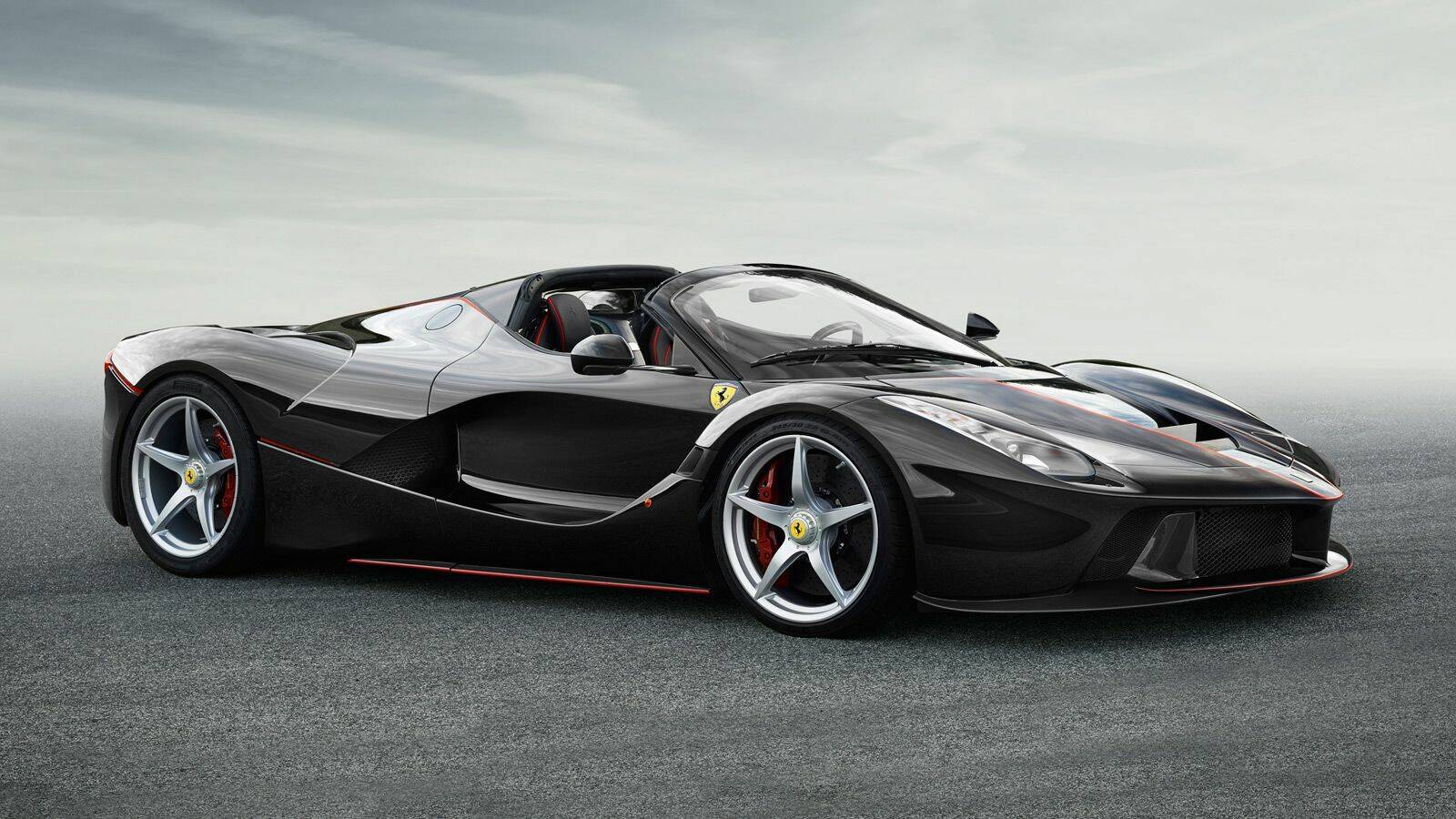
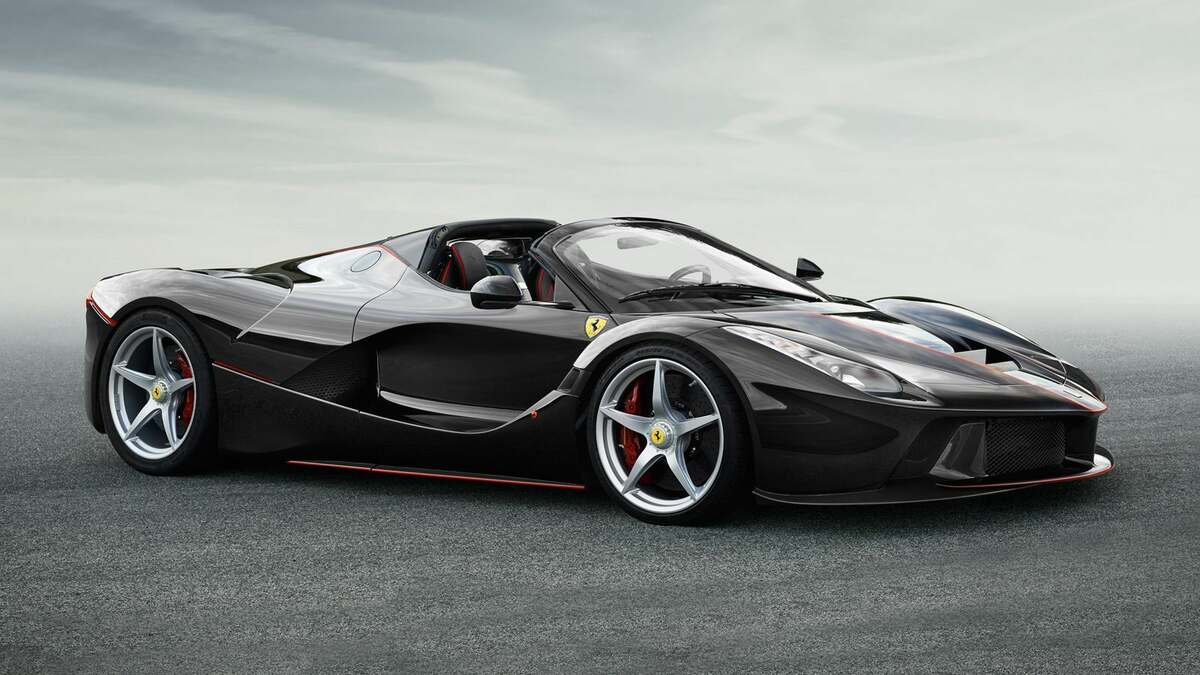
One of the most interesting conversations in auction houses today concerns the rapid promotion of recent cars into the top tier of the market. The LaFerrari, the Porsche 918 Spyder, and the McLaren P1, collectively referred to as the Holy Trinity, were all produced within the last fifteen years. All three now routinely trade for multiples of their original MSRP. A pristine LaFerrari Aperta can command close to eight million dollars. A clean P1 GTR with full factory provenance will clear four.
"The definition of a 'classic' used to require decades of seasoning. That is no longer true. A limited-run hypercar built last year can enter the blue-chip category the moment the last example is delivered." , Director of a leading European auction house
This compression has consequences. It means that the modern hypercar buyer is not purchasing a car in the traditional sense; they are purchasing a future-classic asset whose value will likely outpace any comparable traditional investment. It also means that the line between enthusiast and speculator has become thoroughly blurred. Many of the most desirable modern cars spend their lives in climate-controlled storage, never registered, never driven. The car as asset has fully decoupled from the car as machine.
Provenance Is Everything
In the current market, documentation has become nearly as valuable as the car itself. A Ferrari with Ferrari Classiche certification, the factory's own authentication program, can trade for twenty to forty percent more than an otherwise identical car without it. Racing history, if documented in period, can multiply a valuation. Ownership by a famous figure, particularly one associated with motorsport or design, adds a premium that has no upper ceiling.
This has created a small but flourishing industry of provenance researchers, specialists who trace the chain of ownership and racing history of individual chassis numbers back through decades of logbooks, photographs, and period press coverage. The most respected of these researchers are now as essential to high-end transactions as the auction houses themselves. A flawed chain of documentation can take millions off an otherwise impeccable car.
The Online Revolution
Not all of the growth is happening in marble-floored auction rooms. The most significant shift in the market over the past five years has been the maturation of online-only auction platforms, Bring a Trailer, Collecting Cars, The Market, which have democratized access to the mid-market and created price transparency that simply did not exist a decade ago. Cars in the fifty thousand to five hundred thousand dollar range, historically traded through dealer networks and word-of-mouth, now change hands in public, timed auctions with photographic documentation available to any interested buyer.
This has had a counterintuitive effect on values. By making the mid-market more liquid and more visible, these platforms have increased buyer confidence, which in turn has raised prices across the category. A well-documented Porsche 911 from the air-cooled era that might have traded for forty thousand dollars through private sale in 2015 now routinely clears a hundred thousand. The transparency has not, as some feared, commoditized these cars. It has confirmed them.
What's Being Overlooked
For those still looking for appreciation runway in the collector market, experienced brokers point to several categories that remain surprisingly reasonable. The so-called "modern classics", cars from the 1990s and early 2000s, represent a final bracket where intelligent buying is still possible. Certain BMW M-cars, particularly the E30 M3 and the E39 M5, have appreciated significantly but remain well below their likely long-term ceiling. The Honda NSX, long considered an outlier, is finally being recognized for what it was.
Japanese performance cars more broadly, the Toyota Supra Turbo, the Nissan Skyline GT-R in its various R32, R33, and R34 iterations, the Mazda RX-7, have entered the blue-chip conversation in the past three years. Prices that would have been considered absurd in 2018 are now considered entry-level. And the very best examples, fully documented and time-warp original, are pushing boundaries that nobody had anticipated for the category.
A Question of Sustainability
The obvious question that hangs over the entire market is whether these prices are sustainable or whether we are watching a classic asset bubble that will eventually correct. The honest answer is that no one knows. What can be said is that the fundamental drivers, fixed supply, generational wealth transfer, globalization of collector demand, show no signs of reversing. And unlike conventional financial bubbles, the collector car market is not leveraged in the same way. Most buyers are paying cash, which means a correction, if it comes, would likely look less like a crash and more like a long plateau.
Whatever happens next, the past decade has permanently altered how the automotive world thinks about its own history. The greatest cars ever built are no longer primarily machines. They are cultural artifacts, investment vehicles, and aesthetic objects all at once. Their value is composite, and composite values tend to be surprisingly durable. The Ferrari 250 GTO is not going back to being just a fast Italian sports car from the 1960s. It is something else now, and the market has decided what it is worth.